Loading...
Serving Pasadena, CA and surrounding areas. (213) 953-8008
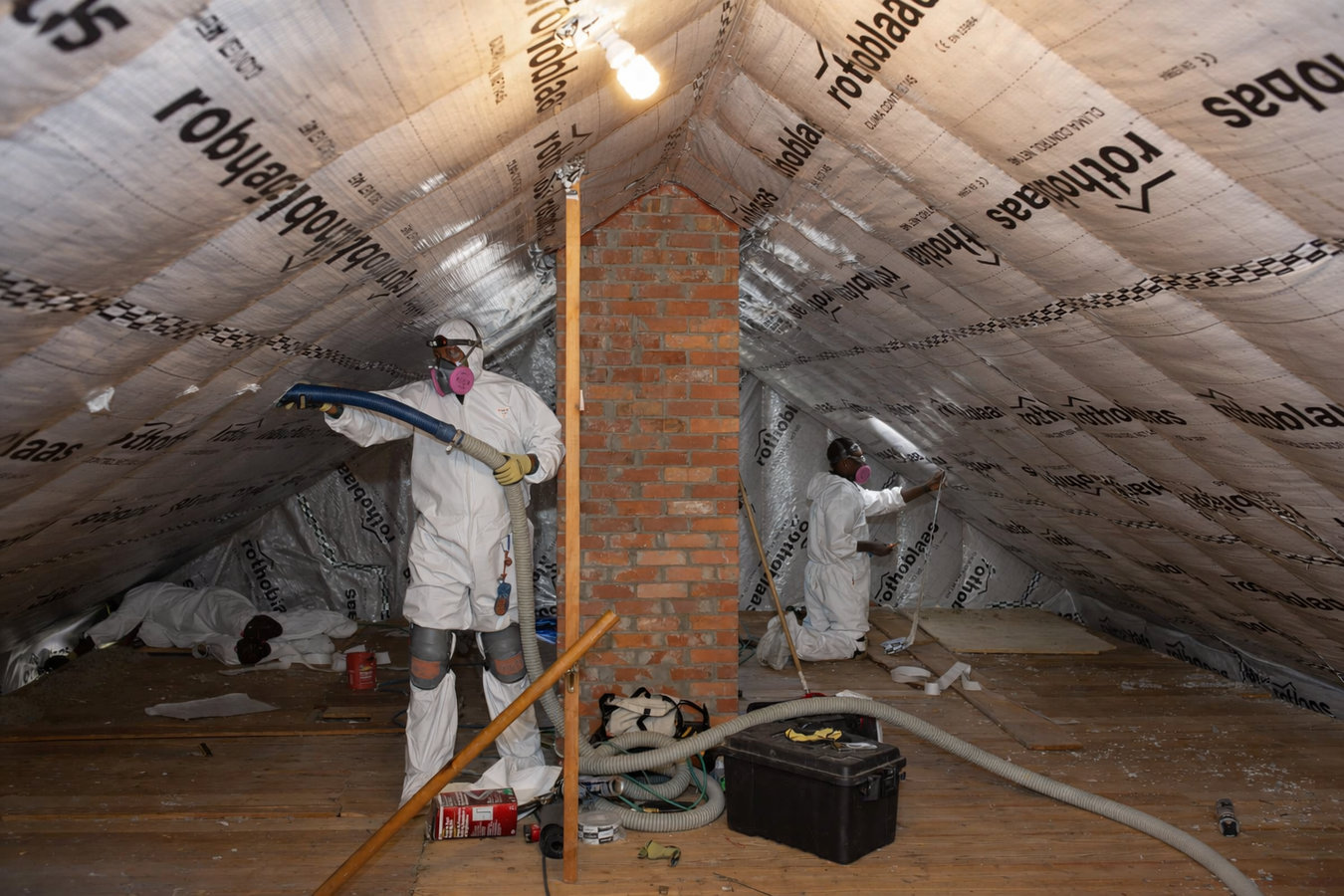
Advanced Pasadena Insulation helps Glendale homeowners with attic air sealing, blown-in insulation upgrades, and spray foam for homes ranging from Craftsman bungalows near Adams Hill to hillside properties near the Verdugo Woodlands. We respond within one business day and all estimates are free.
In Glendale homes from the 1920s through the 1950s, gaps at ceiling penetrations and top plates are responsible for a surprising amount of heat gain in summer and heat loss in winter. Our attic air sealing closes those pathways before blown-in insulation goes in, so the insulation performs at its rated value rather than fighting constant air movement.
Glendale attics in older homes are often partly filled with compressed or degraded original insulation that no longer provides meaningful R-value. Blown-in cellulose or fiberglass is the fastest way to bring those attics up to current California Title 24 requirements without disturbing the living space below.
Hillside homes in Chevy Chase Canyon and the Verdugo Woodlands often have irregular attic spaces, sloped ceilings, and crawl spaces that are difficult to insulate with traditional methods. Spray foam conforms to these shapes and seals and insulates in a single step.
Many of Glendale's Spanish Colonial Revival and Craftsman homes have hollow exterior walls with no insulation at all - a common finding in pre-1950 construction. Retrofit insulation adds wall cavity fill through small-diameter holes that are patched cleanly, preserving the original stucco and plaster without a full gut renovation.
Glendale sits inland enough that summer heat arrives without the coastal buffer many LA residents rely on, and Santa Ana winds in the fall can push outdoor air through every gap in the building envelope. Comprehensive air sealing throughout the home reduces that seasonal pressure dramatically.
Older Glendale homes with raised foundations and vented crawl spaces lose heat through uninsulated floor assemblies in winter and draw in moisture during rainy season. Crawl space insulation combined with a vapor barrier addresses both, protecting the floor system and improving comfort in rooms directly above.
A large share of Glendale homes were built before 1960, and many date to the 1920s and 1930s. These properties were constructed before modern energy codes existed, and the original insulation - if any was installed at all - has had decades to compress, settle, and be disturbed by HVAC replacements, pest activity, and renovation work. Glendale home values are high, and the investment case for proper insulation is strong: utility bills in an underinsulated older home are noticeably higher than they need to be, and the gap only widens as summers get hotter.
The city also has two distinct property profiles that call for different approaches. Central and south Glendale - the flatland neighborhoods along and near Brand Boulevard - are dense with older single-family homes and apartment buildings that mostly need attic and wall upgrades. The hillside areas to the east and north, including Chevy Chase Canyon, the Verdugo Woodlands, and properties near the Verdugo Mountains, fall within high fire hazard severity zones. Those homes require insulation choices that also account for ember intrusion and fire hardening - not every insulation type or installation method is appropriate for properties in those zones.
Our crew works throughout Glendale regularly, and we understand the local conditions that affect insulation work here. The housing stock in this city is genuinely varied - a 1927 Craftsman bungalow near Montecito Park has different wall assembly and attic geometry than a 1960s hillside home in the Verdugo Woodlands, and we approach them differently. We encounter both types frequently across Glendale.
Glendale is oriented around Brand Boulevard, which runs through the heart of the city, and the residential neighborhoods spread outward from there toward the foothills. The neighborhoods near Forest Lawn Memorial Park and the streets around Adams Hill have some of the densest concentration of older homes in the city - streets with original clay tile roofs, plaster walls, and crawl space foundations that we work in often. For hillside properties, the Glendale Planning Division maintains records on fire hazard severity zone designations that affect what materials and methods are appropriate for insulation upgrades in those areas.
We also serve La Canada Flintridge, which lies just north of Glendale along the Foothill Freeway, and Burbank, which borders Glendale to the west. We frequently schedule jobs in both cities on the same week.
Call us at (213) 953-8008 or submit through our contact form, and we will follow up within one business day. Knowing your neighborhood in Glendale - flatland versus hillside - helps us prepare for the estimate visit.
We inspect the attic, walls, or crawl space and give you a written estimate on the spot. We explain the options, the costs, and what each approach accomplishes for your home. There is no charge and no obligation to book.
Most Glendale homes are completed in one to two days. We bring all materials and handle all setup and cleanup. You do not need to be present for the full installation if that is not convenient, though we do ask that someone be available at the start.
We walk through the finished work, confirm installed R-values, and provide written documentation you can use for utility rebate applications or real estate disclosure. For properties in fire hazard zones, we note any observations about attic venting as well.
Serving all of Glendale - from Montecito Park and Adams Hill to the Verdugo Woodlands and Chevy Chase Canyon. Free estimates, no pressure.
(213) 953-8008Glendale is one of the larger cities in Los Angeles County, with roughly 196,000 residents spread across about 30 square miles between the San Gabriel Mountains to the north and the Los Angeles River to the west. The city is known for its strong owner-occupied homeowner culture, its concentration of older residential neighborhoods, and landmarks like the Americana at Brand and Forest Lawn Memorial Park. The city's central flatlands - especially the neighborhoods around Adams Hill, Montecito Park, and downtown - are dense with homes built in the 1920s through the 1950s in Craftsman, Spanish Colonial Revival, and postwar ranch styles.
The eastern and northern parts of Glendale climb toward the Verdugo Mountains, where hillside neighborhoods like Chevy Chase Canyon and the Verdugo Woodlands have larger lots, steeper driveways, and homes built across a much wider range of decades and styles. These hillside areas sit in designated high fire hazard severity zones, which affects both maintenance priorities and material choices for homeowners. Communities directly adjacent to Glendale include Pasadena to the east and Burbank to the west, both of which we also serve.
Seal gaps and maximize energy efficiency with professional spray foam application.
Learn MoreFill hard-to-reach cavities quickly with loose-fill blown-in insulation.
Learn MoreWhole-home insulation solutions that reduce energy bills and improve comfort.
Learn MoreInsulate your crawl space to prevent moisture and temperature transfer.
Learn MoreStop drafts and energy loss by sealing air leaks throughout your home.
Learn MoreHigh-density foam delivers superior moisture resistance and thermal performance.
Learn MoreLightweight foam insulation that excels in soundproofing and coverage.
Learn MoreIndustrial-grade insulation solutions scaled for commercial properties.
Learn MoreBlock ground moisture from entering your home through the crawl space.
Learn MoreProtect walls and floors from condensation damage with a vapor barrier.
Learn MoreWhether your home is a postwar bungalow near Brand Boulevard or a hillside property near the Verdugo Mountains, we can help - call today or submit your details online.